The luxury watch industry is dominated by a relatively small number of well-established manufacturers. Their names are familiar, their histories are impressive, and their products command considerable attention from collectors.
But some of the most interesting developments in modern watchmaking are coming from considerably smaller companies, many of which produce only a fraction of the watches manufactured by their larger competitors.
These independent watchmakers have developed some remarkable movements, introduced entirely new approaches to displaying time, and challenged established ideas about what a mechanical wristwatch should look like.
Here are six manufacturers worth getting to know…
F.P. Journe: Mechanical Ingenuity
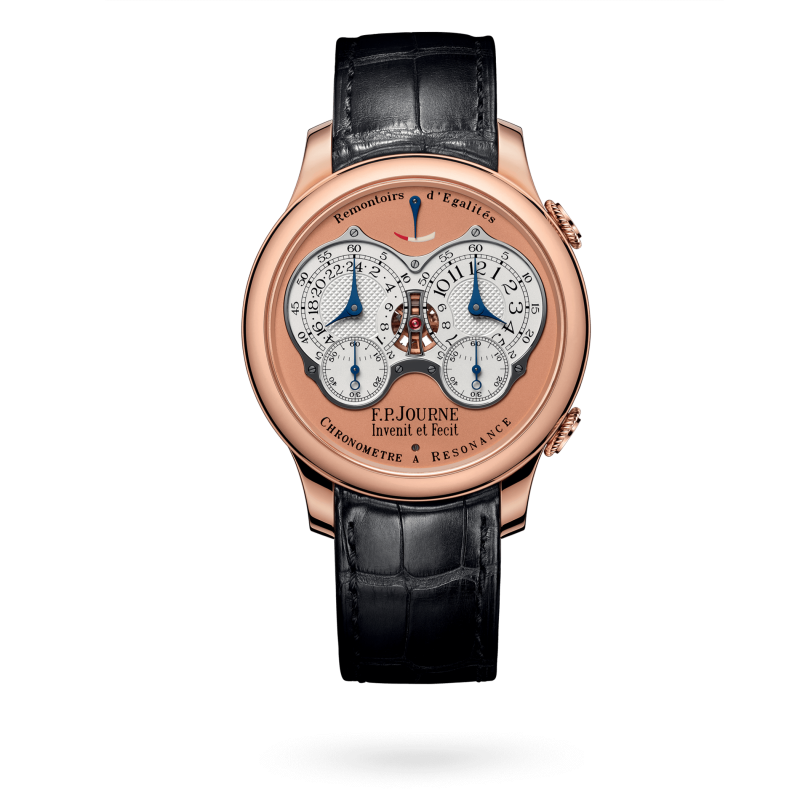
François-Paul Journe has become one of the most respected names in independent watchmaking, combining traditional design with some rather unconventional mechanical innovations.
His Chronomètre à Résonance, introduced in 2000, incorporates two separate balance assemblies designed to influence one another through the phenomenon of resonance. Under appropriate conditions, the oscillators can synchronize their rates, an extraordinarily difficult achievement in a wristwatch that’s constantly changing position.
The watch also features two independently adjustable time displays.
Journe’s innovations aren’t merely decorative. They’re serious attempts to explore the possibilities of mechanical timekeeping.
His watches are highly sought after, with secondary-market values varying considerably by model, production period, and configuration. Early examples featuring brass movements are particularly desirable among collectors.
MB&F: Watchmaking Without Conventional Boundaries
Maximilian Büsser established MB&F in 2005. The name stands for Maximilian Büsser & Friends, reflecting the company’s collaborative approach to watchmaking.
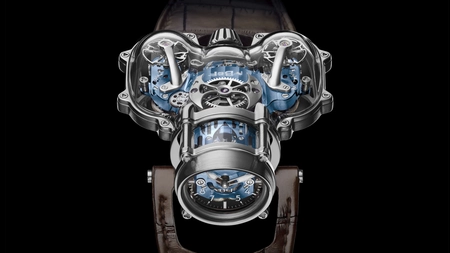
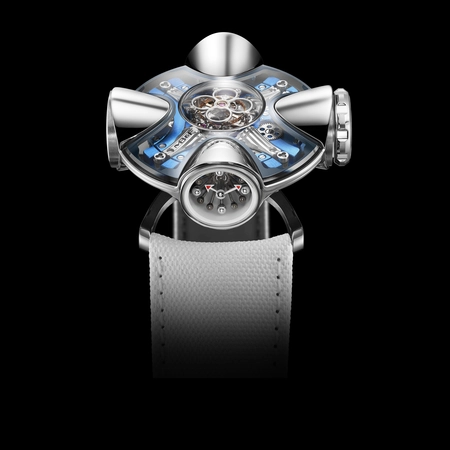
Its Horological Machines often resemble miniature mechanical sculptures, with designs inspired by automobiles, aircraft, architecture, and science fiction. The movements themselves are frequently developed specifically for these unconventional creations.
But MB&F also produces some extraordinary examples of traditional horology.
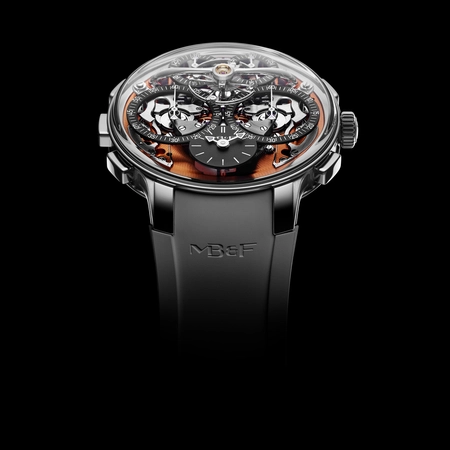
The Legacy Machine Sequential EVO, introduced in 2022 and developed with watchmaker Stephen McDonnell, incorporates two separate chronographs within a single 585-component movement.
Each chronograph operates independently, while a special control called the Twinverter can simultaneously change the operating states of both, allowing several unusual timing functions.
The Sequential EVO received the prestigious Aiguille d’Or at the 2022 Grand Prix d’Horlogerie de Genève.
It’s impressive engineering, even if you don’t regularly find yourself needing to time two events simultaneously.
H. Moser & Cie.: Traditional Watchmaking With an Attitude
H. Moser & Cie. traces its origins to 1828, although the modern company has developed a distinctly unconventional personality.
Alongside beautifully finished movements and sophisticated complications, Moser occasionally demonstrates something rather uncommon in luxury watchmaking: a sense of humor.
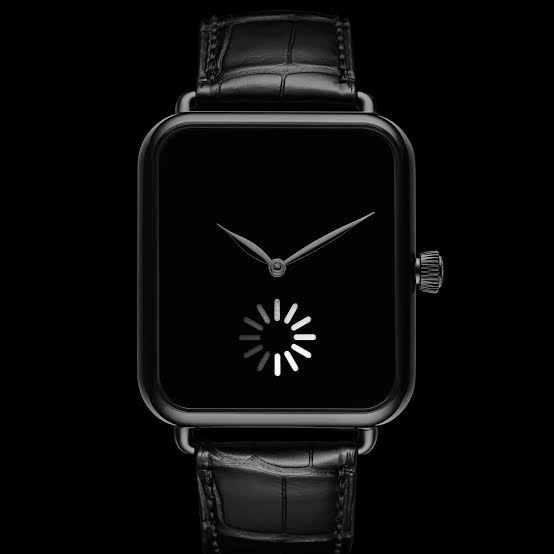
The Swiss Alp Watch, introduced in 2016, deliberately resembled a smartwatch while containing a traditional mechanical movement.
Its final version, released in 2021, featured a black-coated steel case, a Vantablack dial, and a mechanical seconds display resembling the spinning loading symbol of a frozen computer.
A rather expensive joke, but a clever one.
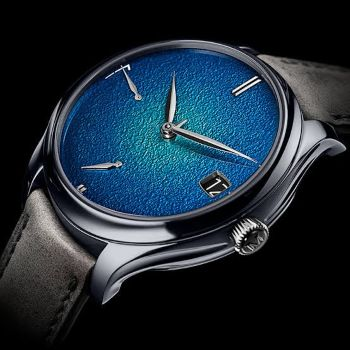
Moser’s technical accomplishments are equally noteworthy. Its Endeavour Perpetual Calendar, introduced in 2005, uses a small central hand to indicate the month against the twelve hour markers, with the leap-year indicator positioned on the back.
The result is an exceptionally clean dial for a watch that automatically accounts for different month lengths and leap years.
Proof that mechanical complexity doesn’t necessarily require visual complexity.
De Bethune: A Different Approach to Modern Horology
Founded in 2002 by Denis Flageollet and David Zanetta, De Bethune combines traditional finishing with unusual case designs, experimental materials, and innovative movements.
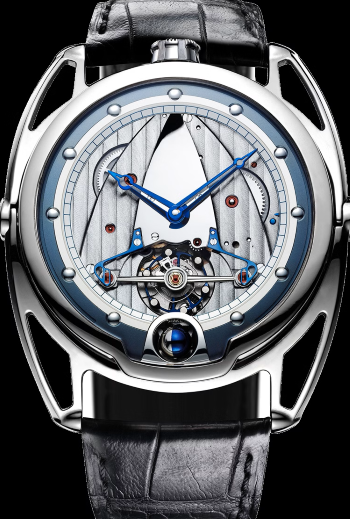
Its DB28, introduced in 2010, features a crown positioned at twelve o’clock and articulated floating lugs designed for improved comfort.
Certain versions incorporate blued titanium components, exposed movements, and three-dimensional moon-phase displays.
But the appeal extends beyond its striking appearance.
De Bethune has developed proprietary balance-wheel designs, shock-protection systems, and other innovations intended to improve mechanical performance.
The DB28 received the Aiguille d’Or in 2011, recognizing a watch that successfully combines unusual styling with serious mechanical engineering.
It’s certainly not understated, but there’s considerable substance behind the design.
Greubel Forsey: Taking Craftsmanship to Extremes
Robert Greubel and Stephen Forsey began collaborating in the late 1990s, eventually establishing one of the most technically ambitious manufacturers in contemporary watchmaking.
Their Double Tourbillon 30°, introduced in 2004, places one tourbillon cage inside another. The inner cage, inclined at thirty degrees, completes a revolution every minute, while the outer cage rotates once every four minutes.
The purpose is to reduce positional timing errors by continually changing the orientation of the regulating mechanism.
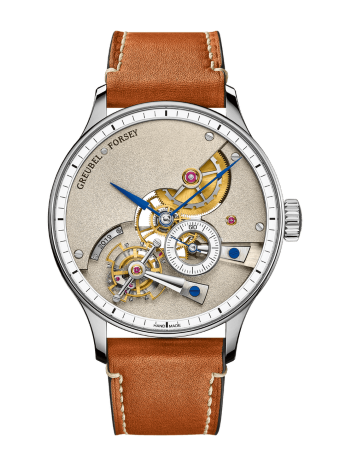
An even more remarkable demonstration of the company’s philosophy is the Hand Made 1.
According to Greubel Forsey, approximately 95 percent of the watch is produced using hand-operated tools, including the manufacture of the delicate balance spring.
Each watch requires approximately 6,000 hours of work, with production limited to roughly one example annually.
Consider that for a moment.
While most manufacturers pursue greater efficiency, Greubel Forsey has deliberately chosen one of the most labor-intensive approaches imaginable.
And there are collectors willing to pay handsomely for it.
URWERK: Rethinking How a Watch Tells Time
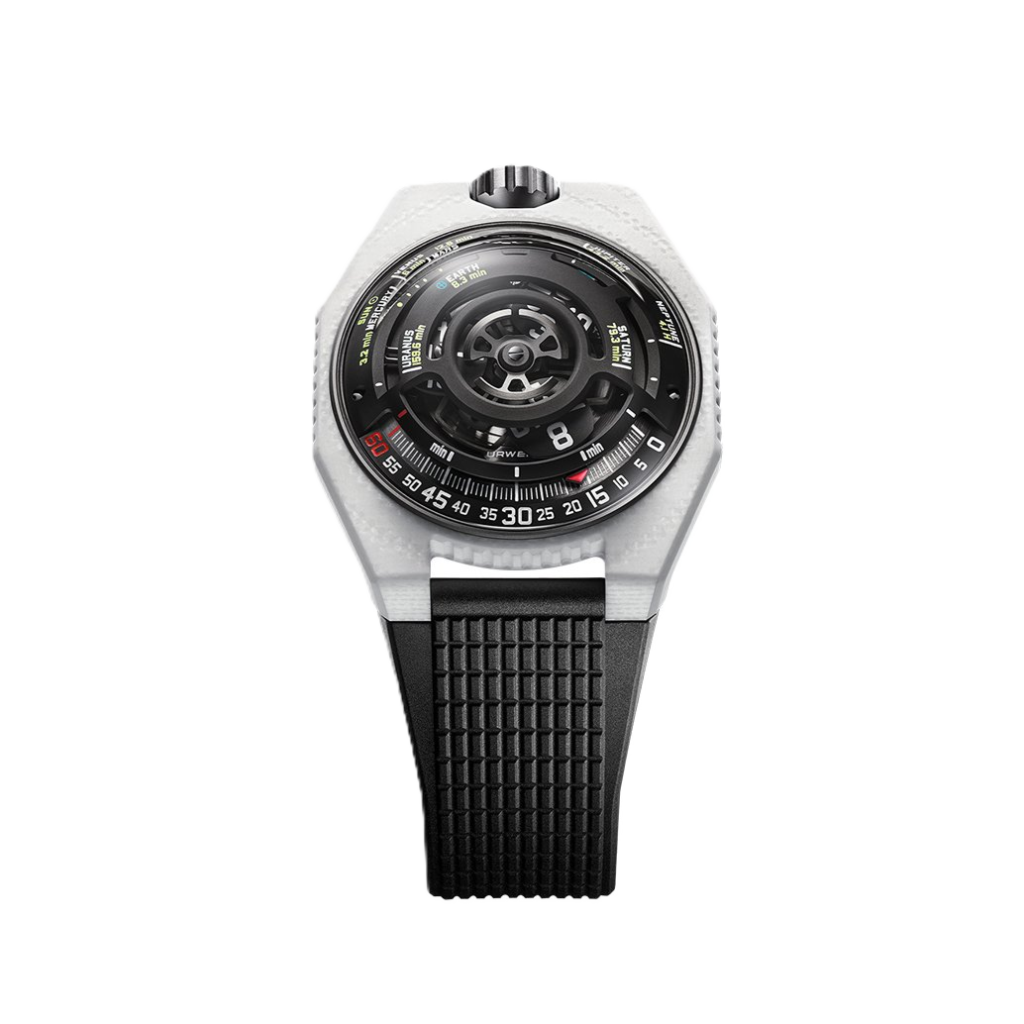
Founded in 1997 by Felix Baumgartner and Martin Frei, URWERK has developed an entirely different approach to displaying time.
Its watches frequently replace traditional hands with rotating satellite mechanisms that indicate the hours and minutes.
The UR-100V is an excellent example.
Rotating satellites display the hours, with pointers traveling along a minute scale. As the mechanism continues rotating, it also indicates theoretical distances associated with the Earth’s rotation and its orbit around the Sun during twenty-minute intervals.
It’s an unusual combination of mechanical horology and astronomy.
Whether these additional indications have any practical value is debatable, but that’s hardly the point.
URWERK has taken centuries-old mechanical technology and developed something that looks decidedly futuristic, without abandoning traditional watchmaking principles.
The Appeal of Independent Watchmaking
These six manufacturers approach watchmaking from remarkably different perspectives.
An F.P. Journe Chronomètre à Résonance shares very little stylistically with an MB&F Horological Machine, while a Greubel Forsey Hand Made 1 and an URWERK UR-100V represent almost opposite interpretations of mechanical horology.
What they share is a willingness to challenge established conventions, whether through technical innovation, traditional craftsmanship, or completely unconventional design.
There are practical considerations. Production numbers are often extremely limited, prices can be substantial, and servicing specialized movements may require returning the watch to its manufacturer.
And while rarity contributes to exclusivity, it doesn’t necessarily guarantee appreciation in value.
But for collectors interested in the mechanical and artistic aspects of fine watchmaking, these manufacturers offer something quite different from the familiar selections.
They also demonstrate that, centuries after the invention of the mechanical watch, there’s still plenty of room for innovation.
And that’s one of the things that makes horology so fascinating.