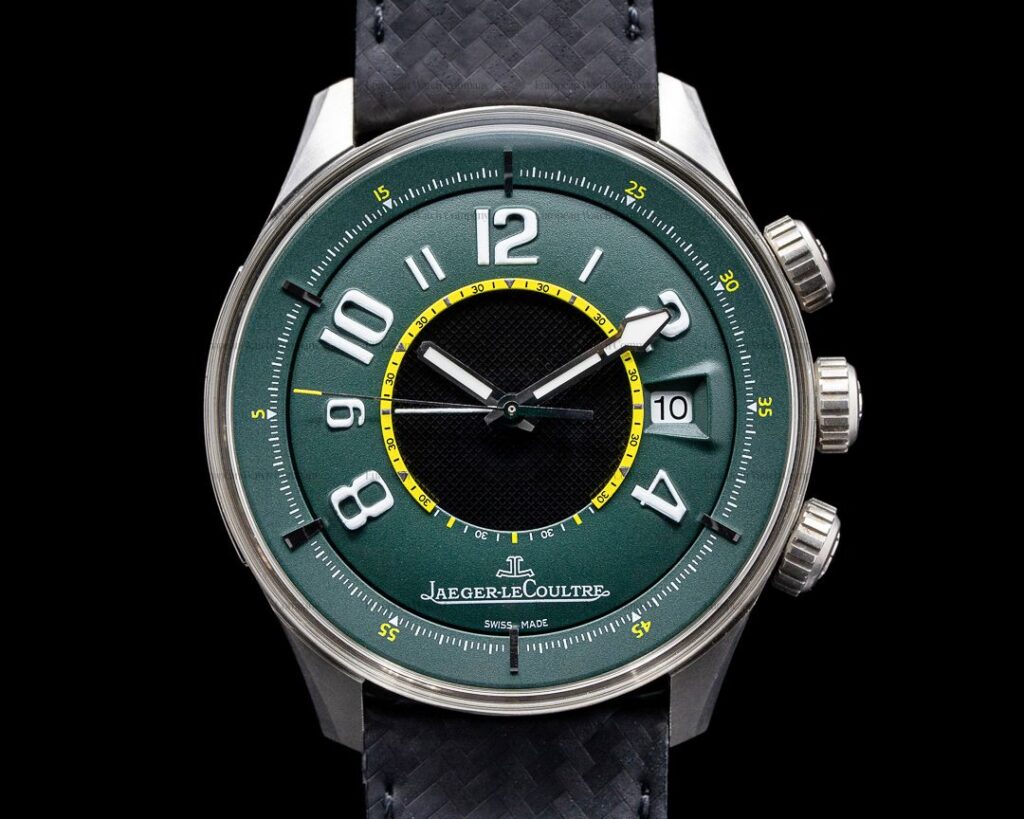
When it comes to true haute horlogerie, few names carry the weight and credibility of Jaeger-LeCoultre.
Founded in Switzerland in 1833, the manufacture has earned a reputation for technical mastery, refined design, and an uncompromising commitment to quality.
For collectors and enthusiasts who value substance over hype, Jaeger-LeCoultre represents something increasingly rare in modern watchmaking: a brand that still designs, engineers, and produces its own movements at an extraordinary level.
In this article, I’ll give you a concise look at the brand’s history—and why Jaeger-LeCoultre timepieces remain such compelling long-term pieces to own.

A Brief History of Jaeger-LeCoultre
Jaeger-LeCoultre was founded by Antoine LeCoultre in 1833 in the Vallée de Joux, the historic heart of Swiss watchmaking. From the beginning, the manufacture distinguished itself not only as a watch brand, but as a true technical workshop—developing tools, calibers, and components used throughout the Swiss industry.
Over the decades, Jaeger-LeCoultre has created more than 1,200 in-house calibers and holds hundreds of patents. The company has long been regarded as the “watchmaker’s watchmaker,” supplying movements to some of the most respected names in haute horlogerie while quietly building its own legendary catalog in parallel.
This deep, movement-first heritage is what continues to separate Jaeger-LeCoultre from many modern luxury brands whose identity is driven more by marketing than mechanical innovation.
The Heritage of Jaeger-LeCoultre Watches
Jaeger-LeCoultre’s history is defined by genuinely influential watches rather than short-term trends. Iconic collections such as the Reverso, Master Control, and Memovox are not simply successful product lines—they represent major milestones in both design and mechanical creativity.
The Reverso, originally created for polo players in the 1930s, introduced a reversible case that remains one of the most recognizable silhouettes in the entire industry. The Memovox brought a mechanical alarm complication into an elegant, everyday format, while the Master Control line established the brand’s modern identity around precision, testing standards, and daily wearability.
Jaeger-LeCoultre has also been responsible for major technical breakthroughs, including ultra-thin movements, advanced calendar mechanisms, including the first perpetual calendar, and some of the most refined chiming and striking complications ever produced.
The Craftsmanship of Jaeger-LeCoultre Watches
One of the defining characteristics of Jaeger-LeCoultre is that it remains a true manufacture. Design, movement development, prototyping, assembly, finishing, and testing are all performed under one roof.
Each movement is assembled and regulated by hand, and many of the finishing techniques—anglage, polishing, striping, and decoration—are still executed in the traditional manner. The brand is also known for its extremely demanding internal testing protocols, which exceed standard industry benchmarks for accuracy, durability, and performance.
In practical terms, this translates into watches that are not only beautiful, but mechanically robust and exceptionally well-finished—qualities that seasoned collectors notice immediately.

The Design Philosophy
Jaeger-LeCoultre’s design language is understated by intention. Rather than chasing bold or oversized aesthetics, the brand focuses on proportion, balance, and long-term wearability.
Whether you are drawn to the Art-Deco elegance of the Reverso, the restrained symmetry of the Master Control, or the more contemporary sport-leaning Polaris models, the unifying theme is refinement. These are watches designed to remain relevant decades from now—both visually and mechanically.
This quiet confidence is one of the reasons Jaeger-LeCoultre continues to resonate strongly with collectors who value timeless design over seasonal trends.
The Investment and Collectability Perspective
Jaeger-LeCoultre should not be viewed as a speculative brand—but rather as a disciplined, long-term ownership brand.
Historically, the market has rewarded:
- iconic references with strong historical relevance
- complicated models with in-house movements
- limited or historically important executions
While Jaeger-LeCoultre does not experience the short-term hype cycles seen with certain sports models from other brands, its watches tend to hold value remarkably well relative to their original retail pricing—particularly when purchased intelligently on the secondary market.
For collectors, this often creates an attractive balance: access to elite watchmaking at a more rational entry point, with stable long-term desirability.
Availability
Jaeger-LeCoultre watches are widely distributed through authorized boutiques and retailers worldwide, and the secondary market also offers outstanding opportunities for collectors seeking discontinued references, special dials, or historically significant models.
At Blackwater Luxury, I focus on carefully vetted examples—prioritizing condition, completeness, and correct reference integrity—so clients can acquire exceptional Jaeger-LeCoultre timepieces with confidence.
Final Thoughts
Jaeger-LeCoultre represents one of the most authentic expressions of Swiss watchmaking still operating today. Its legacy is built not on celebrity endorsements or limited-edition marketing, but on nearly two centuries of technical excellence, disciplined craftsmanship, and thoughtful design.
For collectors who value true manufacture pedigree, mechanical depth, and enduring style, Jaeger-LeCoultre remains one of the strongest—and most intellectually rewarding—names in luxury horology.